
Palms and canopies kept clean, healthy, and storm-ready.
Scheduled palm pruning, canopy lifting, and hurricane-season hardening for communities across Lee, Collier, and Charlotte counties.
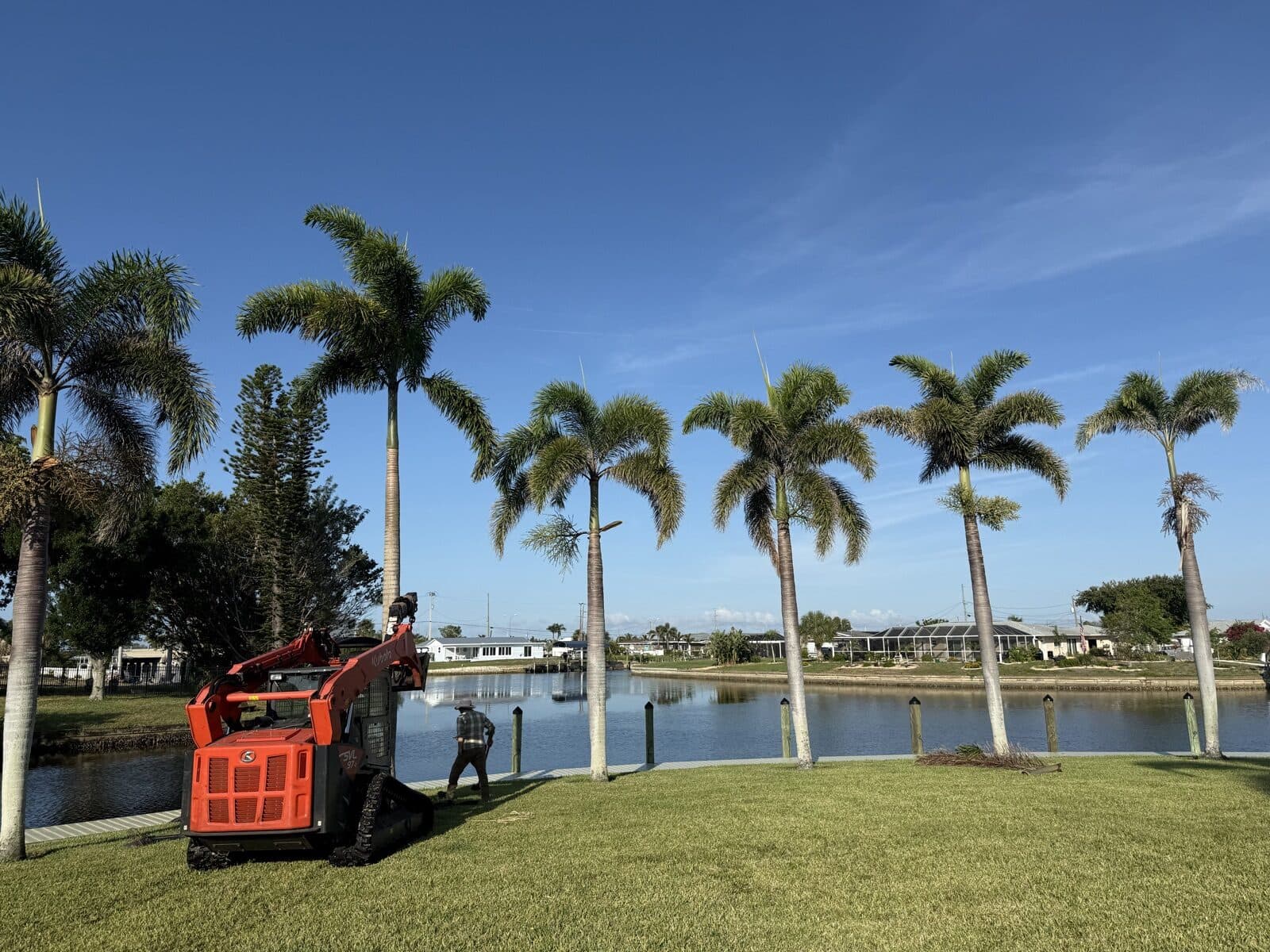
The full scope, in writing.
- Annual and bi-annual palm pruning and skinning
- Canopy lifting over roads, walks, and signage
- Shrub and ornamental shaping
- Pre-season hurricane hardening (June readiness)
- Post-storm debris cleanup and hazard removal
- Health assessments for declining trees and palms
Overgrown canopies block signage and lighting, and unpruned palms become projectiles in a storm - both are liability problems before they're aesthetic ones. BCQ runs tree and palm work on a documented schedule, with hurricane prep completed before season peaks and crews ready for post-storm response.
Tree & Palm Care, the way we actually deliver it.
Tree and palm work in a community is a liability program before it's an aesthetic one. A canopy that's crept down over a stop sign, an entrance light swallowed by an oak, a dead royal palm frond hanging forty feet over a sidewalk - these are the items an insurance inspector or an attorney notices. Running the work on a documented annual schedule, with photos, is how a board demonstrates it maintained its trees rather than reacted to them.
Southwest Florida's palette needs species-specific handling. Royal palms shed enormous, heavy fronds that should never be left to drop over parking or walks. Queen palms need regular cleaning of seed pods and dead fronds. Sabals tolerate a harder prune but shouldn't get one: the 'hurricane cut' that strips a palm to a feather duster actually weakens it and slows recovery, so we prune to a healthy standard and decline requests to scalp. On the canopy side, live oaks and mahoganies get annual lifts over roads, walks, and signage - done before storm season, when the same clearance work also removes the deadwood most likely to fly.
Hurricane season drives the calendar. Hardening - palm cleaning, canopy lifting, deadwood removal, securing anything loose - is scheduled for completion before the season peaks, because a June request placed in August competes with every other property in Lee County. After a storm, communities on a BCQ maintenance program get priority dispatch: hazards and blocked roads first, then debris, with photo documentation suitable for insurance claims.
The program also watches health, not just shape. Crews flag declining palms and trees during routine visits - nutritional deficiencies that show up in the fronds, conks at the base that suggest ganoderma, storm-damaged leaders - so the board hears about a $200 assessment before it becomes a $2,000 emergency removal. When removal is the answer, we confirm the city's permit requirements before any saw starts, because an unpermitted removal is a fine on top of an invoice.
Execution in a community is as much logistics as arboriculture. Work over streets and sidewalks gets coned and scheduled for the quietest hours so residents aren't dodging a chipper on the way to work; fronds and debris are hauled the same day, not staged on the swale for the weekend; and everything runs under Blue Collar Q LLC's insurance, with a COI in your management company's vendor file before the first climb. Quotes come from a counted inventory - how many royals, how many oaks, what clearance where - so the number the board approves is tied to the actual trees on the property.
The standing tree and palm schedule for a Southwest Florida community, timed around the June-November storm season.
| Scope item | Cadence / rate | Notes |
|---|---|---|
| Palm pruning & skinning | Annual or bi-annual, per species | Royals, queens, and sabals each on their own cycle - no 'hurricane cuts' that weaken the palm. |
| Canopy lifting (oaks, mahoganies) | Annual, before storm season | Clearance restored over roads, walks, lighting, and signage; deadwood removed in the same pass. |
| Shrub & ornamental shaping | On the maintenance rotation | Handled by the grounds crew every 4-6 weeks in season. |
| Hurricane hardening | Scheduled May-June | Completed before season peaks - August requests wait behind the whole county. |
| Post-storm response | Priority dispatch for program clients | Hazards and access first, then debris, with photo documentation for insurance. |
| Health assessments | Flagged during routine visits | Declining palms and trees photographed and assessed before they become emergency removals. |
| Removals | Quoted per tree | City permit requirements confirmed before any removal starts. |
What the documentation includes
- Work log - every tree and palm serviced, with before-and-after photos
- Clearance issues found over roads, walks, lighting, and signage
- Declining or hazardous trees flagged, with assessment notes and photos
- Hurricane-prep status for the property, tracked against the season
- Post-storm damage documentation formatted for insurance claims
- Next-cycle pruning quotes so the board can budget a year ahead
Straightforward pricing.
Scheduled palm and canopy work is quoted per tree from a property walk, so the board approves a flat number tied to a counted inventory - not an open-ended day rate. Smaller flagged work is handled at the posted maintenance labor rate.
- Crew labor (flagged and small-scope work)
- $65/hr
- Scheduled pruning & canopy programs
- Flat, per-tree quote from a walk
- Removals
- Quoted per tree, permits confirmed first
Annual programs bundle palm and canopy cycles into the community's fixed schedule, priced before the fiscal year starts.
Real tree & palm care in Southwest Florida.
What boards and managers ask us.
Straight answers, the same ones we give in board meetings. Anything else, call us at (239) 799-5594.
How often should palms be pruned?
It depends on the species. Royals, queens and sabals each run on their own cycle, typically annually or twice a year. We prune to a healthy standard and decline the stripped "hurricane cut", which weakens the palm and slows recovery.
When should hurricane preparation be done?
Before the season peaks. Hardening, meaning palm cleaning, canopy lifting, deadwood removal and securing loose material, is scheduled in late spring so the property is ready before the first storm, when every crew in the county is booked.
What happens after a storm?
Communities on a BCQ maintenance program get priority dispatch: hazards and blocked roads first, then debris, with photo documentation formatted for insurance claims.
Do you handle tree removals and permits?
Removals are quoted per tree and we confirm the city's permit requirements before any saw starts. Declining trees and palms are flagged with photos during routine visits so the board hears about a problem before it becomes an emergency removal.
Get a free property assessment.
Tell us about your property and we'll schedule a walkthrough and a clear, itemized quote, usually within one business day. Have an RFP or current scope? Send it and we'll bid it line for line.
Insured · Blue Collar Q LLC
Prefer to talk? Call (239) 799-5594 or email contact@bcqlandscaping.com.